Ms. Park is a famous actress in South Korea and has the body and face that is described above. In order to maintain her look for a long time, she has to put a lot of effort into it. In the process of sculpting her “perfect” body, the habits and choices she makes may be good or can be very damaging to her health. Ms. Park is constantly being pressured by her boss, staff, and fans. She can barely make any decisions over her own life.
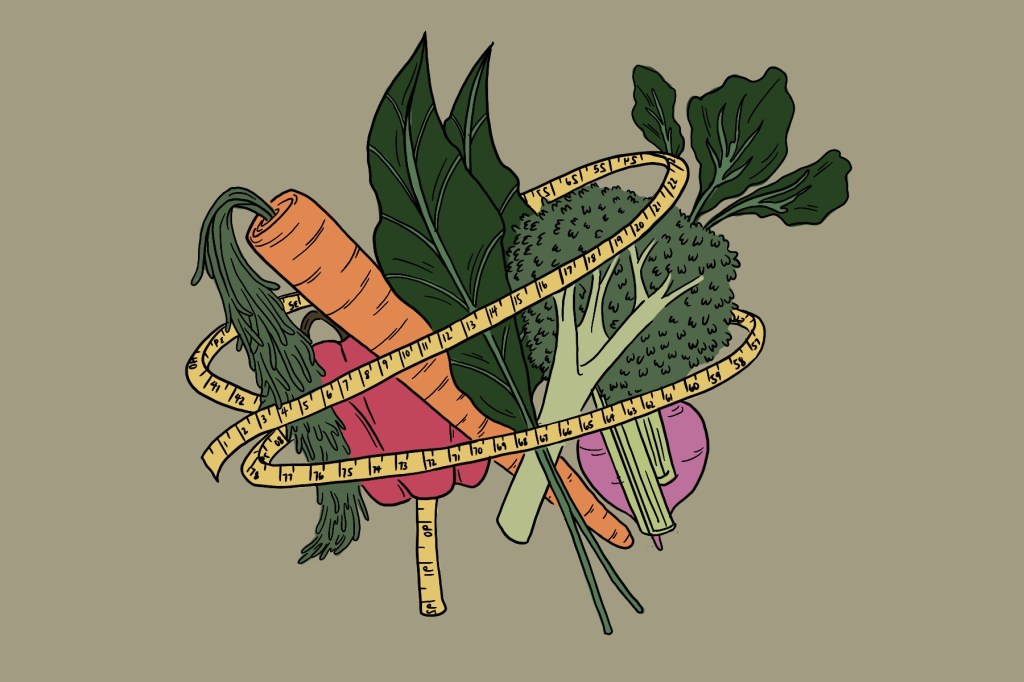
An example of these beauty ideals being implemented is in Park’s life, is when she auditions for important roles there are always expectations as to what body type specifically fits the role. Although she has the standard body type everyone wants, there are always talented actresses who have similar physical characteristics as her that she has to compete against. If she gets the part she auditioned for not only does she have to practice her lines and go through all the filmmaking but she has to maintain the body that helped her get chosen for the role. Which means she has to maintain her current weight and exercise regularly.
Being a well known actress might come with glory and reward but it is hard to stay true to oneself when everyone’s eyes are on you. In reality, Park said that she was sick and tired of keeping up with her body image and the beauty standards that were placed upon her. She was dealing with eating disorders, depression and was insecure of her body. No one knew what she was going through because, in front of the camera she had to look happy and as if she was living her best life but on the inside she was unhappy. The industry promotes these “attainable” body types which many young generations are following. In the long run these beauty ideals are harming people’s self esteem and are starting to lead to eating disorders.
Today in China, the younger generation of Chinese women are more likely to experience body dissatisfaction and are open to the idea of “beautification” compared to their parents and grandparents. “Less than a century ago, women in China were still binding their feet into a “three-inch golden lotus” in pursuit of the ideal female beauty, and a man could simply refuse to marry a woman with normal-sized feet because she was considered ugly, ungraceful, and unchaste” (Wang, 2000). The exposure of cosmetic surgery, Western media, Westernized beauty standards and social media have shaped the way “ideal beauty” is viewed in Southeast Asia today. Women all over the world are suffering from body image issues. In the United States, “Korean and Chinese college women and adolescents demonstrated higher levels of body image dissatisfaction than did their [non-Asian] counterparts” (Jung et al., 2009).
Most people think that Asian women are naturally born slim but in reality Asian women are on the rise struggling with weight concerns, dieting behaviors and eating disorders (Zhang, 2012). Most common cosmetic surgery among Asian women are double eye-lid, nose reshape and chin lift. Traditionally, having “Phoenix eyes” and “willow-leaf eyebrows” emphasized beauty in Chinese culture. There are meanings behind the shape of a person’s nose. For example “someone with a round, fat nose is perceived as dull and lazy, while someone with an Aquiline nose (or “hook nose”) looks cunning and unkind. In addition, having a face like “a watermelon seed or goose egg-shaped is commonly believed to be the beauty ideal for women in China” (Zhang, 2012).
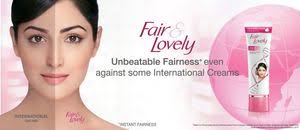
The colonization by Europeans influences the culture and history of non-white countries. One example is skin tone. In many Asian countries, skin color is often associated with the amount of wealth and privilege one has. Having fair-colored skin means you have a high social status and don’t have to perform manual labor because you are “able to hire others to do work in the hot sun left the wealthy indoors in the shade—cultivating a distinct difference between the fair skin of the upper classes and the sun-baked visages of laborers”(Le, 2014). On the other hand “women who have dark skin, thus, face difficulties and even discrimination in social and personal relationships.” In addition, skin tone also defines “beautifulness” and attractiveness for women. If you have a lighter skin tone, it is usually connected to the concept of “Femininity, youthfulness, and fertility” (Zhang, 2012). That’s why Asian women spend so much money on to obtain a lighter complexion because they want to feel and look powerful.
When the actress Park has filming season during hot and humid months, she applies a lot of cosmetic skin-whitening cream and sunscreen because she has to protect her skin from a strong, bright sun. Her main reason is to prevent her skin color from turning tan. Her essentials might include skin-whitening products, an umbrella, and a cover up shirt. No matter how hot it is she has to endure it because she can’t afford to tan and get criticized.
The way people view their physical characteristics are highly influenced by mass media and social media. There are two kinds of exposure among Southeast Asia, local media and Western media. We often look at things at macro level and forget to examine the issue at a micro level. The Western media does have a huge impact but local media influence more on the way Southeast Asia women view their body and “beauty”. “Adolescent Chinese girls who reported their favorite mass media (television shows, movies, music) came from Asian countries were significantly more likely to judge themselves to be overweight, whereas endorsements of U.S. mass media had weaker, non-significant relations with weight perceptions” (Jackson, Jiang, Chen, 2016).
In conclusion, who do we blame for creating a certain standard on the way we appear. We can’t blame Park for meeting the standard because it is her job and she’s sacrificed so much to be in the position she is at. Then should the blame be put on Park’s boss? That is where it gets controversial. Because in order to make profit and pay the employees, the boss has to advertise things that are appealing and accepted by consumers. Yet more actors today are starting to stray away from those habits. Speaking out on the harm that is caused by maintaining the beauty ideal. So a message to our readers: remember that the media, culture, race and power introduce “beauty standard” to society and we all approve of the idea.
Reflection:
Beauty standards and body image in general are complicated and have different influences on different countries and cultures. I chose to write about beauty standards and body image in Southeast Asia because I want to explore more what it’s like to be a young woman growing up in the culture where fat shame and whiteness play a major role in daily life. Around the world, a lot of beautiful young women are experiencing depression and dissatisfaction with the way they look. It is very unhealthy to compare oneself to the people we see on the screen which lower one’s self-esteem and confidence. Some people do live in two opposite worlds and they can never be themselve. For example, households culture. Your family wants to feed you a lot of food and don’t really pay attention to how much you weigh or your physical characteristics. To them you are unique, pretty and as long as you are well fed and healthy, that’s all that matters. Once you walk out of the front door, you experience society’s expectation on how you are supposed to look in order to be “beautiful”. As I grew older, I started to compare myself with people I consider “pretty” “perfect”. Well that didn’t help me, instead it causes more dissatisfaction in my life. We are living in a world where negativity and power oppressed our everyday choices. We need each other’s support and advocacy to change our perspective on how we define “beauty”. If someone were to read my magazine article, I would want to share “We were all created differently and no of us are supposed to look the same. It wasn’t god’s intention to make us all the same size, shape, height, etc. Everyone is unique in their own way. And should look the way they feel most comfortable and happy”.
Works Cited
Jackson, Todd. Jiang, Chengcheng. Chen, Hong. (2016). Associations between Chinese/Asian
versus Western mass media influences and body image disturbances of young Chinese
women, 175-183. (Peer reviewed)
Le, C.N. (2014, June 4). The Homogenization of Asian Beauty. Retrieved from
Zhang, Meng. (2012). A Chinese beauty story: how college women in China negotiate beauty,
body image, and mass media, Chinese Journal of Communication, 5:4, 437-454, DOI:
10.1080/17544750.2012.723387. (Peer reviewed)
 Paw Klu's Blog